September 4, 2012

Guest Post: Teens, Bipolar, and a Very Different Ghost Story

I'm happy to welcome Jeannine Garsee, author of The Unquiet, to the blog today for a Psychtember guest post!  

The UnquietFirst, a little bit about the novel: 

"Sixteen-year-old Rinn Jacobs has secrets: One, she’s bipolar. Two, she killed her grandmother.

After a suicide attempt, and now her parents' separation, Rinn and her mom move from California to the rural Ohio town where her mother grew up. Back on her medications and hoping to stay well, Rinn settles into her new home, undaunted by the fact that the previous owner hanged herself in Rinn's bedroom. At school, her classmates believe the school pool is haunted by Annaliese, a girl who drowned there. But when a reckless séance goes awry, and terrible things start happening to her new friends—yet not to her—Rinn is determined to find out why she can’t be "touched" by Annaliese...or if Annaliese even exists.

With the help of Nate Brenner, the hunky “farmer boy” she’s rapidly falling for, Rinn devises a dangerous plan to uncover the truth. Soon reality and fantasy meld into one, till Rinn finds it nearly impossible to tell the difference. When a malevolent force threatens the lives of everyone she cares about--not to mention her own--she can't help wondering: who should she really be afraid of?

Annaliese? Or herself?" (from Goodreads)


TEENS, BIPOLAR, AND A VERY DIFFERENT GHOST STORY
Jeannine Garsee

I notice people often casually toss around psychiatric terms, like “I’m feeling kind of schizophrenic today.” Or, “God, I’m so moody—I must be bipolar.” For years, my own knowledge of mental illness was strictly limited to movies like Sybil and The Three Face of Eve…or the occasional patient I’d have (I’m a RN) that all us of nurses labeled as “totally nuts”—often because they rang their call bell fifty times a shift, demanded steak dinners, or cussed us out for no reason.
           
As far as bipolar goes, I thought it was a pretty cut-and-dried mental disorder. You were either high and happy or very low and depressed, right?

Wrong. Until I started working in a psych unit back in 2008, I had no idea that bipolar disorder was such a serious disability, and that people who go untreated can become as actively psychotic as any schizophrenic.
           
Bipolar disorder is sometimes referred to as a disease of judgment—poor judgment. The belief that there’s nothing wrong with you, that it’s everyone else. The risk-taking behavior. The reluctance to take any mood-stabilizers because it knocks you out or dulls your senses. After all, it’s fun to feel high, and productive, on top of the world—that is, until you lose your friends, your job, and even your family support because, frankly, no one can put up with you anymore. Not only does your “high” behavior pose a danger to your life, but the depression that often follows can sometimes lead to suicide.
           
When I started The Unquiet back in 2005, it was to be strictly a ghost story. But after working on a psychiatric unit, and spending many hours around people who saw things and heard things no one could see or hear, who insisted they were speaking to “spirits” and “demons”—and observing their bizarre reactions to these hallucinations—I decided to up the ante and give my main character a mental illness, leaving the reader to wonder at certain points: is this really happening, or is Rinn, imagining it?  

Rinn is complex character. She’s unique in the sense that she accepts her illness and is motivated to stay well, and still very typical of many others with bipolar disorder. No one “wants” to depend on medication, especially psychotropics, for the rest of their lives. Sadly, there is still a stigma connected to mental illness; often the strange, destructive, and socially unaccepted behaviors are viewed as attempts to garner attention or as a weakness in one’s self-control. The reluctance to take medication may be due to embarrassment (Rinn’s terrified her friends will find out she is on antipsychotics). Psych drugs also have some very unwanted side effects: Some cause weight gain and some decrease your sex drive, while others can affect your body’s metabolism as well as your immune system. Many require regular blood work to monitor the drugs levels and to make sure you’re not susceptible to infections. Who wants to be stuck with needles all the time?

Teens are particularly vulnerable to medication non-compliance. Take the raging hormones of adolescence and the not-quite-mature brain of a teenager, add to his or her never-ending quest for self-identity and acceptance, and you can imagine why they’re reluctant to admit the need to take medications that might label them as “crazy.”

Bipolar disorder is not something you outgrow. It’s not something that can be controlled with willpower, or diet, or merely ignored in the hope it’ll disappear. Rinn learned this the hard way; her refusal to stay on her medications led to the loss of all of her friends. Her behavior was obnoxious, and often illegal. She used drugs and acted out sexually. She broke into a home, and later, into a stable to ride her favorite horse—an incident that could have ended in tragedy. It takes a real tragedy, the death of her grandmother—inadvertently caused by Rinn while in an acutely psychotic state—to make her realize that staying on her medications is the only way to keep her, and everyone around, safe. It’s also this incident that triggers her parents’ separation and her subsequent move to River Hills, Ohio, where her best intentions to stay on her medications is compromised by a ghost named Annaliese.

Because bipolar disorder is now being diagnosed very early in some cases (source: Reuters--http://www.reuters.com/article/2010/01/15/us-usa-child-trial-research-idUSTRE60E0NC20100115), children as young as preschool age are now are able to receive the proper treatment. It’s my hope that young adults will not only pick up The Unquiet to discover an entertaining ghost story, but that some of them—those with bipolar disorder or other mental illnesses—will see a bit of themselves in Rinn…and realize they can control their illness and lead normal, happy lives. 

Copyright 2012 by Jeannine Garsee

"Jeannine Garsee has been telling stories since before she could write. "I was addicted to the Sunday funnies," she says, "and my dad worked in a book-binding factory. He'd bring home a slew of paper every week, and I'd draw scenes on every page. Later, when I learned to write, I'd add the captions--and then the captions just grew longer and longer till I didn't have any room left for the pictures." Jeannine, known as "Jen" to her friends, works as a psych nurse in a busy inner-city hospital. Born and raised in Ohio, she lives with her family in a southwest suburb of Cleveland." (from her website)


Thanks, Jeannine, for dropping by and discussing bipolar disorder and your novel The Unquiet! 

September 3, 2012

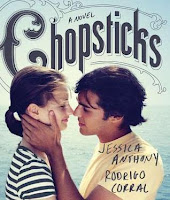
Chopsticks: A Psychtember Suggestion

Chopsticks by Jessica Anthony and Rodrigo Corral

"After her mother died, Glory retreated into herself and her music. Her single father raised her as a piano prodigy, with a rigid schedule and the goal of playing sold-out shows across the globe. Now, as a teenager, Glory has disappeared. As we flash back to the events leading up to her disappearance, we see a girl on the precipice of disaster. Brilliant and lonely, Glory is drawn to an artistic new boy, Frank, who moves in next door. The farther she falls, the deeper she spirals into madness. Before long, Glory is unable to play anything but the song "Chopsticks."

But nothing is what it seems, and Glory's reality is not reality at all. In this stunningly moving novel told in photographs, pictures, and words, it's up to the reader to decide what is real, what is imagined, and what has been madness all along...
" (from Goodreads)
Chopsticks is very different from the type of book I normally read, seeing as it's composed mainly of images (like photos and drawings) in a scrapbook style, with a few words (in letters, notes, IM conversations, and quotes) throughout. Since I don't think I can really give it a rating with my usual system or discuss the psychological accuracy, instead I'm just going to give you a few of my thoughts on it:
  • I was impressed by how well the authors were able to convey the story, emotions and mood without using very many words, although I did have to flip back and forth a bit to try to figure out what was going on.
  • It's really cool the way it starts to creep up on you towards the end that something's wrong here, with previous details taking on new meaning and giving it an unsettling twist.
  • The ending is a little confusing, but I think it's intended to be somewhat ambiguous. The way information is conveyed in the first part of the book raises questions that are never answered (spoilery examples, highlight to read: the drawings originally signed by Francisco Mendoza are later signed by Glory...did she hallucinate his signature? What about his notes — did she write them herself in different handwriting, or did she imagine them?), which is admittedly a little frustrating. I suspect some readers might feel a bit "cheated" because the mystery isn't really guessable from the presentation of images and information we're given. 
  • Unfortunately we're not given enough explanation for me to be able to assess how accurately the psychological side of things is approached. It's clear that Glory's mom's death has had a lasting impact on her, fueling her obsession with the piece "Chopsticks." The more serious problem Glory has involves major spoilers: Glory seems to be psychotic, constructing this guy "Francisco" from her own imagination, and creating the story of their relationship. The details — how long she's been psychotic, what triggered her to experience this particular hallucination and delusion — are less clear.
  • I actually stayed up reading this book; it makes you think and hits a depth you wouldn't expect from a book with so few words. It doesn't go into very much detail, obviously, so it all depends on a reader's interpretation, but I think people might underestimate how serious and powerful a book crafted with these mediums can be.
  • Ultimately, Chopsticks demonstrates a really neat way to tell a story. For someone looking for a very different approach to a story about a teen with mental illness, one that is surprising, unexpected and plays with format and medium, then I would definitely suggest they check out Chopsticks.
Note: there is also a multimedia component associated with Chopsticks, in particular an app. My thoughts above are strictly on the book itself, but you can visit the website for more information on the app.

September 2, 2012

Coming To Terms With Psychology Terms

Casual misuse of psychology terminology really irritates me. I'm sure it must be the same for any field of specialization, but I think we see more incorrect use of words related to psychology in books, just because human behaviour is such an important part of characterizations and stories generally.

So, I'm going to list a few terms here and their correct meanings, so that the next time you read them you'll be able to spot them and go, "Aha! This author so totally didn't do their research here."

Psychopathic: describing someone who is a psychopath — an individual with a number of distinctive characteristics, including limited emotional capacity, manipulative tendencies, and an absence of guilt or empathy. As in, "The psychiatrist testified that the serial killer was psychopathic." Not to be confused with psychotic. Helpful pop culture example: Dexter.
Psychotic: referring to an individual who experiences a disconnect with reality, in the form of either auditory and/or visual hallucinations, delusions, catatonia, or a thought disorder (in other words, psychosis). As in, "Sally admitted she saw chartreuse flamingoes doing the hula, and the therapist realized that Sally was psychotic." Disorders which may have psychosis as a symptom include schizophrenia, bipolar disorder and depression, and substance abuse can also result in psychosis.
Schizophrenic: describing an individual with schizophrenia — a mental disorder characterized by a combination of symptoms that may include psychosis, personality/behavioural change, and difficulties with social, emotional and cognitive functioning. There are five subtypes of schizophrenia recognized by the DSM (Diagnostic and Statistical Manual of Mental Disorders)-IV: paranoid, catatonic, disorganized, undifferentiated, and residual. Helpful pop culture example: John Nash from A Beautiful Mind.
Dissociative identity disorder: a rare mental illness characterized by two or more identities present within one individual (sometimes termed "alters"). The cause is still not well-understood, although there may be a connection to trauma experienced. This used to be called split, dual, or multiple personality disorder, but the DSM-IV term is dissociative identity disorder. People sometimes confuse this one with schizophrenia, but they are two very different disorders. Helpful pop culture example: Gollum/Smeagol from Lord of the Rings.
Obsessive-compulsive disorder: one type of anxiety disorder that involves obsessions (cognitions) the individual does not want to have, followed by behaviour or mental acts the individual feels compelled to perform to rid themselves of the anxiety brought on by the obsession. I see the term "OCD" thrown around so frequently that you'd think half the population had it, but you can't claim that you have OCD just because you have a particular quirk or obsession. There are specific diagnostic criteria that must be met, just like any other disorder. Not to be confused with obsessive-compulsive personality disorder. Helpful pop culture example: the guidance counselor, Emma, from Glee.
Obsessive-compulsive personality disorder: unlike OCD, this is a personality disorder, not an anxiety disorder. Someone with OCPD has a general preoccupation with perfectionism, order, and control; symptoms include: extreme attention to detail and regulations, rigidity of personal views, dislike of delegating tasks to others, and excessive devotion to work. Unlike OCD, which is ego-dystonic (incompatible with the individual's self-concept, making it unwanted), people with OCPD do not find their symptoms problematic (making it ego-syntonic). Helpful pop culture example: Monica from Friends (admittedly, she's never diagnosed with it, but I suspect she at least has a tendency to OCPD).
Asperger's: a syndrome on the autism spectrum characterized by difficulties with interacting socially, and specific behavioural patterns. This is another term that gets tossed around pretty casually, but once again this is diagnosable; it can't be declared just because someone is quirky, geeky, or anti-social. Helpful pop culture examples: Brennan from Bones and Sheldon from The Big Bang Theory (Sheldon's is unconfirmed, but much of his behaviour is certainly indicative of Asperger's syndrome).
 
Subconscious: in essence, a word made up by pop psychology. If you're talking about Freudian theory, please do not use this term as it is incorrect. For more info see this Wikipedia article.
Unconscious: Freud's term for the part of the mind that is wholly outside of our own awareness. This, the preconscious, and the conscious make up the mind in Freudian theory.
Hope this helps the next time you stumble across a psych term you're not sure about while reading! I know I've only touched on a few here, though, so psychology aficionados: which terms do you find being misused in YA (or other books)?

September 1, 2012

Guest Post: Bibliotherapy and the Power of Books

Reader HappyTo kick off Psychtember, I'm pleased to welcome Len from Musings of a Reader Happy to the blog for a guest post on bibliotherapy!

Bibliotherapy seems to be a straightforward term.  Derived from the greek word, Biblion (book) and therapy (treatment).  Though in reality its definition can vary from the simplest to a broader range. 

David Russell and Caroline Shrodes (1950, from Allen et al., 2012) have deduced from their review of literature that bibliotherapy, “as a process of dynamic interaction between the reader and literature – interaction that may be utilized for personality assessment or for adjustment, preparation, healing and growth.”  The Greeks even posted above their library doors the words, "the medicine chest of the soul."

Though literature and other researches on this area suggest therapeutic attributes of reading books, it does not necessarily follow that it meant to be a form of psychotherapy, or for teachers and librarians as therapists.  Librarians themselves agree, that handing out books to those who are already under forms of clinical stress might even prove to be detrimental to their healing.  They cautiously approach this matter.

As a personal stand, bibliotherapy can be a supplementary form of therapeutic activity, or in itself an informal type of release.

We have heard a lot of stories and comments from fellow readers of how books (or reading) have changed their lives. 
“Life-transforming ideas have always come to me through books.” — Bell Hooks
I even remember this event called #YASaves, where some fellow bloggers speak out in reaction to an article lamenting on how dark the trend of YA books have become.  It stirred my own experience with books, because I myself was saved by books.  Perhaps the word, “saved” is a bit dramatic for some but it is true, and just one of the things a book can do to a reader, depending on his/her experience of it.

“There are only two worlds - your world, which is the real world, and other worlds, the fantasy. Worlds like this are worlds of the human imagination: their reality, or lack of reality, is not important. What is important is that they are there. these worlds provide an alternative. Provide an escape. Provide a threat. Provide a dream, and power; provide refuge, and pain. They give your world meaning. They do not exist; and thus they are all that matters.”
— Neil Gaiman, The Books of Magic

Jami Jones reiterates that, “anytime a book is read by someone who needs its message to solve a problem or reflect on a challenge, bibliotherapy has occurred.”  Ask any reader and they always have their own fair share of stories of how books helped them. 

“We live and breathe words. It was books that kept me from taking my own life after I thought I could never love anyone, never be loved by anyone again. It was books that made me feel that perhaps I was not completely alone. They could be honest with me, and I with them.”
— Cassandra Clare

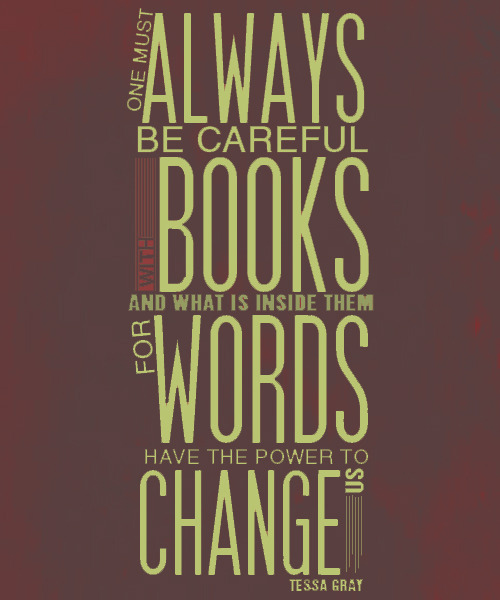
Now, whether reading books is in itself an act or a therapy, simple or complex, how or why, I think it’s best to say that books are indeed powerful.  That they have the power to change us.

(x)

sources:

Allen, James R., Allen, Sandra F., Latrobe, Kathy H., Brand, Michael, Pfefferbaum, Betty, Elledge, Brenda, Burton, Tracey, and Guffey, Matthew.  (2012).  The Power of Story:  The Role of Bibliotherapy for the Library.  Children and Libraries.  
Jones, Jami L.  (2006).  A Closer Look at Bibliotherapy.  Young Adult Library Services:  Feature. 


[Len Delgado (maidenveil) graduated with a Bachelor of Science degree in Psychology, and MA in Counseling Psychology. She's currently focused with research and recent studies on social, young adolescent, gender, and personality, and exploration on Forensic Psychology.]

Thanks very much, Len, for sharing your thoughts on how books can impact us! Readers, do any of you have experience with bibliotherapy? What books have changed your lives in big ways?

Psychtember is Back!

That's right: it's September, which means it's time again for PSYCHTEMBER!

psychtember2012button1-2

I first hosted this event last year and was really pleased by the response it received, so I decided to bring it back for a second time. Basically, the purpose of the event is to highlight YA books that normally don't get that much attention: those involving mental health issues. I have a B.A. in psychology and still love learning about the subject, so I decided to combine my interests in YA and psychology, and create an event that spreads awareness of these books and topics.

Just like last year, there'll be reviews, guest posts by fellow bloggers, guest posts by mental health professionals, interviews with authors (some familiar faces and some new), and giveaways! If you weren't here for the first Psychtember and are interested in what it's all about, feel free to browse last year's posts.

Psychtember Question Box!This year, I've started up a Goodreads list for YA books with mental health issues published from 2000 onwards. There are a number of Goodreads lists for specialized topics, like YA about eating disorders, or YA dealing with violence/abuse, but no general list for recent YA books about mental health. I've only just created it, so if you'd like to help round it out, please feel free to add titles to the list, or vote for your favourites. (If you're not sure if a book qualifies, just ask!)

I'm also still looking for questions for Dr. Carolyn Kaufman, a clinical psychologist and writer who will be stopping by the blog later on in the event, so if you are wondering anything about psychology and writing, please leave your questions here! (Don't worry, it's anonymous :))

If you could spread the word in any way to let people know that Psychtember has begun, that would be awesome! And I'd love it if you'd grab either of these event buttons to add to your blog sidebar:

psychtember2012button1-2


psychtember2012button4a-2


Disclaimer: I know that mental health issues can be a sensitive subject, so I'd like to point out that my posts are never intended to offend. No, I am not a mental health professional, just someone with a Bachelor's degree in psychology and a passion for the field. I may get things wrong from time to time; if I do, you can always send me an e-mail about it! Also, I am not responsible for the content of the guest posts for the event — I don't like to censor so I have largely left the posts up to the writer's discretion. If you or a friend/family member is experiencing psychological distress, I recommend seeking out a mental health professional. This event is not meant to replace that type of help. 

Related Posts with Thumbnails