Showing posts with label panoramic review. Show all posts

August 1, 2019

The Ten Thousand Doors of January: A Panoramic Review (Adult)

The Ten Thousand Doors of January by Alix E. Harrow

"In the early 1900s, a young woman embarks on a fantastical journey of self-discovery after finding a mysterious book in this captivating and lyrical debut.

In a sprawling mansion filled with peculiar treasures, January Scaller is a curiosity herself. As the ward of the wealthy Mr. Locke, she feels little different from the artifacts that decorate the halls: carefully maintained, largely ignored, and utterly out of place.

Then she finds a strange book. A book that carries the scent of other worlds, and tells a tale of secret doors, of love, adventure and danger. Each page turn reveals impossible truths about the world and January discovers a story increasingly entwined with her own.


Lush and richly imagined, a tale of impossible journeys, unforgettable love, and the enduring power of stories awaits in Alix E. Harrow’s spellbinding debut–step inside and discover its magic." (from Goodreads)

My reaction: For me, The Ten Thousand Doors of January was a book that is objectively quite well-written (especially for a debut), but did not suck me in and make it impossible for me to put it down. On the contrary, I read it in bits and pieces, a little at a time -- which ended up more or less working, as I was able to remember the big picture storyline, and I flipped back to previous sections when needed. For the first three-quarters or so, the book alternates between January's perspective and the story of Adelaide (a story-within-a-story format), and I found it a bit jarring at times to go back and forth between them. 

I liked both January and Adelaide as protagonists, and just generally I thought the characterization here was very well done. The characters were distinctively drawn, and it was nice to see a diverse cast. However, I never totally connected with January or Adelaide, and felt like I was held at a bit of a distance from them. 


The writing style really stood out to me as well. While it tended to the flowery and purple prose-y side of things, and therefore was not that accessible or page-turning in quality, there was something so very quotable about so many of the lines I came across. When I first started reading it, it felt a bit deja-vu-ish, in that it kept reminding me of books from my childhood. Harrow's writing has a quality that is reminiscent of Neil Gaiman's; little pearls of wisdom and reflection are dropped throughout, and phrased in a beautiful and powerful way. 


Best aspect: the concept of the Doors leading to other worlds -- not that this is a fresh concept or anything (hey, it's been done in so many well-known fantasy novels), but I thought the way it was handled here was neat. There are doors to pretty much every kind of world imaginable, and  since stories are basically like doors to other realms, the whole thing is kinda meta. Most readers would be thrilled if they could have January's powers to open Doors! Definitely reader wish fulfillment territory. (However, I should note that most of the book does take place in our world, and that considering the premise, more page time could have been spent actually in some of the other worlds, rather than just hearing stories about them.)

I also really appreciated the touching and thought-provoking themes and ideas Harrow raises throughout the story, including family, loyalty, friendship, abandonment, independence, "otherness," and forgiveness. While the writing is not the most accessible, the themes threaded through this story most certainly are. While there is a touch of romance here, it is not central to the story arc; rather, the story revolves around January's journey to discovering her strength and values. 


If I could change something... as I said, the writing did tend to the overly descriptive, to the point where I was like, "Do you really need another metaphor here?" Metaphors can be used very effectively, but they also need to be used fairly sparingly in order to make the most impact. It's the kind of writing where you feel like a thesaurus may have been employed quite a lot, and unfortunately that can actually make things harder for a reader to visualize, and can impede the flow of reading. So I think that should have been addressed in editing, to ensure that the writing style didn't slow down the momentum of the story. 

I also found the plot very predictable. I think this is probably the weakest aspect of the book -- most of the "reveals" really didn't seem terribly surprising to me (or at least, I had guessed at them by the time January figures them out). Spoilers, highlight to read: I mean, I didn't guess that Yule Ian was her father when he was first introduced, but by the time January finds out that he is, I'd put the pieces together. And I wondered pretty early on if Mr. Locke was the fellow who had bought the land from Adelaide's aunts, and had burned the Door after January opened it.

If you haven't read it: and you enjoy books about self-discovery, friendship, adventure, and wanderlust, pick this one up. 


If you have read it: did you guess the "twists" ahead of time like I did?

Just one more thing I wanted to mention: found the notion that revolution and change occurs because things "leak" through the Doors an interesting one, and I wish it had been explored further. (Maybe in a future companion novel???)


Quote: Hard to pick just one! Here are a few I particularly liked:


That afternoon, sitting in that lonely field beside the Door that didn't lead anywhere, I wanted to write a different kind of story. A true kind of story, something I could crawl into if only I believed it hard enough.

Those of you who are more than casually familiar with books -- those of you who spend your free afternoons in fusty bookshops, who offer furtive, kindly strokes along the spines of familiar titles -- understand that page riffling is an essential element in the process of introducing oneself to a new book. It isn't about reading the words; it's about reading the smell, which wafts from the pages in a cloud of dust and wood pulp. It might smell expensive and well bound, or it might smell of tissue-thin paper and blurred two-colour prints, or of fifty years unread in the home of a tobacco-smoking old man. Books can smell of cheap thrills or painstaking scholarship, or literary weight or unsolved mysteries.


It is fashionable among intellectuals and sophisticates to scoff at true love -- to pretend it is nothing but a sweet fairy tale sold to children and young women, to be taken as seriously as magic wands or glass slippers. I feel nothing but pity for these learned persons, because they would not say such foolish things if they had ever experienced love for themselves.

May she wander but always return home, may all her words be written true, may every door lie open before her.


Final verdict: 4 shooting stars. 


Disclaimer: I received a copy for review from the publisher.


January 4, 2018

The Forgotten Book: A Panoramic Review

"A Jane Austen-inspired YA tale about a sixteen-year-old girl who finds a magical book—and discovers that anything she writes inside it comes true.

Emma is used to things going her way. Her father is headmaster of her prestigious boarding school, her friends take her advice as gospel, and she's convinced that a relationship with her long-time crush is on the horizon.

As it turns out, Emma hasn't seen anything yet. When she finds an old book in an abandoned library, things really start going Emma's way: anything she writes in the book comes true.

But the power of the book is not without consequences, and Emma soon realizes that she isn't the only one who knows about it. Someone is determined to take it from her—and they'll stop at nothing to succeed.

A new boy in school—the arrogant, aloof, and irritatingly handsome Darcy de Winter—becomes Emma's unlikely ally as secrets are revealed and danger creeps ever closer.
" (from Goodreads)
The Forgotten Book by Mechthild

My reaction: I was on the fence for the first 5 or 6 chapters of this book, but really ended up enjoying it (and polishing it off in a day!). Initially I kept trying to figure out which character was supposed to represent which Austen character (as I knew the book was Austen-inspired) and I was seeing all the parallels. This was kind of distracting for me, especially considering that it pulled from both Emma and Pride & Prejudice, which seemed discordant, since it wasn't following one story or the other, but a mishmash.

However, once the magical book was introduced, this became its own story (just with elements of Austen). 

Best aspect: The fantastical, magical aspect of the story. The premise of a book that makes whatever is written in it come true was explored in interesting (and sometimes bittersweet) ways. I loved the connection to fairy tales and folklore, and the messages in this story about the power of words, and the danger of trying to make wishes come true (that could end up having unforeseen consequences!). It certainly showed magic to be a double-edged sword. Plus, the whole idea of this magical book totally gave me Harry Potter and the Chamber of Secrets vibes!


If I could change something... I'd flesh out some of the side characters. Charlotte and Hannah seemed very similar to me, and apart from their alignment with their Jane Austen counterparts (spoilers, highlight to read: Charlotte as Jane from P&P, Hannah as Harriet from Emma) I didn't feel like they had much personality. I also felt like Darcy fell into stereotype, and could have been explored more. I was okay with the romance but I wasn't crazy about it — while I liked their initial bickering dynamic, I thought it moved quite suddenly to an "Oh, I'm in love with him" realization without a smooth transition.

I'd also tighten up the middle of the story; it felt a little drawn-out, where for a while they kept getting clues but not getting any closer to solving the mystery! (However, I liked the mystery itself, which was very intriguing and kept me hooked, and when the reveals happened, they were well done and unexpected.) 

If you haven't read it: and you want to read a story set in a boarding school with magical elements (a la Hex Hall or Vampire Academy), but tinged with a haunting, bittersweet mystery, then this book could be what you're looking for.

If you have read it: did I miss something, or did the storyline involving (spoilers: the niece Marie) get totally dropped?

Just one more thing I wanted to mention: I liked Emma's voice. She was a little immature and made mistakes, but she wasn't irritatingly immature; she realized when she made mistakes and was willing to admit it.

Final verdict: 4 shooting stars. This is the sort of book that both makes you want to believe in magic and fear it at the same time. Definitely recommend!


Disclaimer: I received this as an ARC for review from the publisher. 

December 7, 2015

The Lake House: A Panoramic Review (Adult)

21104828
"From the New York Times and internationally bestselling author of The Secret Keeper and The Distant Hours, an intricately plotted, spellbinding new novel of heartstopping suspense and uncovered secrets.

Living on her family’s idyllic lakeside estate in Cornwall, England, Alice Edevane is a bright, inquisitive, innocent, and precociously talented sixteen-year-old who loves to write stories. But the mysteries she pens are no match for the one her family is about to endure…

One midsummer’s eve, after a beautiful party drawing hundreds of guests to the estate has ended, the Edevanes discover that their youngest child, eleven-month-old Theo, has vanished without a trace. What follows is a tragedy that tears the family apart in ways they never imagined.

Decades later, Alice is living in London, having enjoyed a long successful career as an author. Theo’s case has never been solved, though Alice still harbors a suspicion as to the culprit. Miles away, Sadie Sparrow, a young detective in the London police force, is staying at her grandfather’s house in Cornwall. While out walking one day, she stumbles upon the old estate—now crumbling and covered with vines, clearly abandoned long ago. Her curiosity is sparked, setting off a series of events that will bring her and Alice together and reveal shocking truths about a past long gone...yet more present than ever.

A lush, atmospheric tale of intertwined destinies, this latest novel from a masterful storyteller is an enthralling, thoroughly satisfying read.
" (from Goodreads)

 
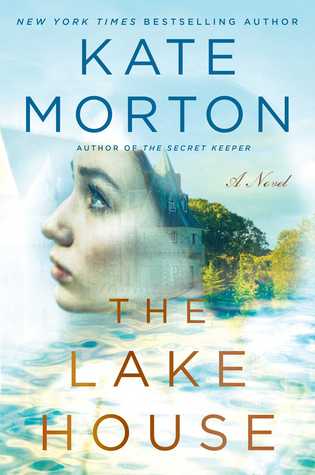
The Lake House by Kate Morton

My reaction: This book had me really invested in the story until the last few chapters. I'd DNFed another book recently and so I was hoping this one would do a better job of pulling me in — and it did, certainly. I kept coming back to it, enjoying getting to know the characters (with all of their many flaws and secrets) and watching as Sadie slowly unpeeled the mystery of what happened that night. I'll admit, maybe 2/3rds of the way through I started getting frustrated because I just wanted to know already and the mystery was getting drawn out so long, since they kept coming up with new theories as each new piece of information was revealed! But I was on board, because I found the characters and their motivations and relationships (especially those in the historical timeline) fascinating. As always, Morton described the atmosphere of the surroundings well, although Loeanneth did remind me somewhat of The Forgotten Garden

I really enjoyed getting to watch as Sadie constantly revised her theory as she gathered new evidence. It was very logical and it let the reader feel like they were right alongside her, trying to figure this out (with, of course, some additional information they got from the historical chapters). Finally we do find out what happened that night, which wasn't so surprising anymore given the secrets we'd learned along the way, but it made sense. It didn't turn out as tragically as I'd been expecting, given that there'd been such a foreboding tone throughout the story, but it certainly fit with everything we'd learned. 

But then Kate Morton took things a step further and the very end — which I guess was supposed to be the 'big reveal' — was just too convenient and wrapped up too quickly. It was like everything got resolved perfectly neatly, no loose ends, all pieces of evidence fit tidily into the puzzle, and it came off as contrived. Spoilers, highlight to read: The thought had briefly crossed my mind that one of the other characters might be revealed to be Theo, but I had dismissed it. And indeed, I found Bertie turning out to be Theo to be too coincidental. The fact that Sadie just happened to get interested in this unsolved mystery, and then ends up being related to Alice? All of the evidence we're given to make it seem more realistic, like the button from his romper that ended up on the floor in the nursery and was still there all those years later? (Speaking of which — how careless was that initial police investigation, really?) Anyway, the cheerful tone of the ending just didn't seem to fit with the darker tone of the rest of the story.

Best aspect: the psychological aspect that's introduced partway through. I won't give spoilers but those of you who know me know that I love psychological elements in my stories! And this one makes sense with the historical setting. 

Also, I really loved the character of Eleanor. It's very easy for the reader to be sympathetic to her, and it was so intriguing to see how differently she was portrayed when the narration was in her own head versus the POV of her daughter Alice. Even when I didn't always condone what she did (spoiler: it is always hard for me to support characters when they engage in adulterous affairs), I could sort of rationalize why she was doing what she was doing, because of the circumstances.

If I could change something... I'd give it an ending that was a little more realistic and bittersweet, perhaps ambiguous, and less "perfect." I also wish we'd been provided with more explanation and background for the storyline involving Mr. Llewellyn. 

If you haven't read it: and you enjoy long, slow-burn mysteries involving family secrets, troubled relationships, and characters who feel very human, then pick this one up — especially if you don't mind endings that come off as rather convenient. The setting and vibe of the story, especially at the start, really reminded me of the film Atonement (I haven't read the book), so if you enjoyed that, you might like this one too.

If you have read it: what did you think of the ending? Did it work for you? 


Just one more thing I wanted to mention: There were some passages in here that are very quotable! I kept updating my Goodreads status with quotes as I read.  

Quotes like:


"Sometimes 'feelings' aren't as airy-fairy as they seem. Sometimes they're just the product of observations we haven't realised we've been making."

and


"In her relief, Eleanor had stood for a time in the darkened room, watching the faint undulations on the lake, silver-rimmed clouds being drawn across the pewter sky, nursing the uncanny sense of being the only person on earth awake." 


Final verdict: 4 shooting stars. An engrossing mystery with characters that come alive; however, I was a little let-down by the ending, which was not as impactful as I would have hoped.


Sidenote: anyone know why they seem to have changed the cover design of Morton's novels with this latest book? The Lake House cover doesn't match the others, and I think I prefer the original style.  

Disclaimer: I received this as an ARC for review from the publisher.


June 14, 2014

Vicious: A Panoramic Review (NA/adult)

"A masterful, twisted tale of ambition, jealousy, betrayal, and superpowers, set in a near-future world.

Victor and Eli started out as college roommates—brilliant, arrogant, lonely boys who recognized the same sharpness and ambition in each other. In their senior year, a shared research interest in adrenaline, near-death experiences, and seemingly supernatural events reveals an intriguing possibility: that under the right conditions, someone could develop extraordinary abilities. But when their thesis moves from the academic to the experimental, things go horribly wrong. Ten years later, Victor breaks out of prison, determined to catch up to his old friend (now foe), aided by a young girl whose reserved nature obscures a stunning ability. Meanwhile, Eli is on a mission to eradicate every other super-powered person that he can find—aside from his sidekick, an enigmatic woman with an unbreakable will. Armed with terrible power on both sides, driven by the memory of betrayal and loss, the archnemeses have set a course for revenge—but who will be left alive at the end?

In Vicious, V. E. Schwab brings to life a gritty comic-book-style world in vivid prose: a world where gaining superpowers doesn’t automatically lead to heroism, and a time when allegiances are called into question.
" (from Goodreads)

Note: This review includes some mild spoilers, as there was just too much I wanted to talk about. Major spoilers about the ending, however, are whited out.

Vicious by V.E. Schwab

My reaction: 
  

This is the sort of book suited to readers who don't mind completely dislikeable, loathesome, irredeemable characters. Because that is what Vicious gives you. This book has the most vile, sickening characters that I've read about in a long time.

As is obvious from the above description, there are two main characters here, Victor and Eli, and really it's a six-of-one-half-a-dozen-of-the-other situation as far as I'm concerned. Victor specializes in magically torturing people and Eli specializes in killing them the old-fashioned way. If I were forced to pick, I suppose I would choose Victor, simply because he seems to be more sane and stable than Eli. I think that if, heaven forbid, I somehow got in his way, I might be able to reason with Victor if I had something to offer him (like a useful superpower), in order to keep him from killing or torturing me. Whereas if I was an ExtraOrdinary and I ran into Eli I would be just plain out of luck, convinced as he is that he is on a God-given mission to eradicate all ExtraOrdinarys (save himself, of course, because he's "special".) 

Joining their ruthless ranks is Serena, Eli's sort-of girlfriend, who specializes in compelling everyone around her to do what she wants. She sometimes sickened me more than the others because she was so slick in manipulating people. We're told she is unable to "turn it off" and likes it when people resist her; perhaps that was supposed to make us sympathize with her but it didn't really work. Personally I thought she quite liked getting her way and twisting Eli around her little finger. Add to that her betrayal of her younger sister Sydney and let's face it, she was not about to win me over.

The only characters I actually liked were Sydney, Mitch, and the dog Dol. Sydney was a sweet, relatively innocent young girl who, despite the many obstacles she'd faced, had not turned all brutal the way Victor, Eli and Serena had. She was gutsy and had a quiet inner strength – sort of an "old soul." It was kind of sad and pathetic the way she saw Victor as her "safe place," given that the reader is well aware of his less-than-friendly attitude towards anyone who gets in the way of his plans. Mitch really seemed to care about Sydney and acted protective of her. And the dog, well, his loyalty to and bond with Sydney was admittedly adorable.


Best aspect: the complex, thought-provoking nature of Victor's and Eli's relationship and views of each other, both in college when this whole mess began as well as ten years later. While they may see themselves as vastly different (and they make every attempt to repeatedly tell themselves that) they are really two sides of the same coin. 

For Eli, there is a good dose of religious fanaticism motivating his "mission", whereas Victor is all about the cold hard facts. Eli's more impulsive and passionate, Victor more clinical, clever and exacting. In college, Eli was the charismatic one, naturally claiming the spotlight, easily charming the girl, whereas Victor lurked in his shadow, always a step behind. Victor has a glint of humanity left, evidenced by his befriending of Sydney and Mitch, while Eli appears to care for no one.

Yet their similarities are far more striking than their differences. Each determined to prove himself — Victor to Eli, who he seems to hero-worship; Eli to the world, and perhaps God. Each willing to take risks, to be utterly ruthless, to get a step closer to their ultimate goal. Each with a cruel sadistic streak that only widens when they become ExtraOrdinary. Each fascinated with pushing the boundaries of science and ethics. It is the height of irony that they both consider themselves to be on the side of "right" and the other on the side of "wrong" when from the reader's perspective it is easy to put both firmly in the category of "villain." (In fact, to underscore this point — the story primarily alternates between Victor's and Eli's perspectives, and I had a lot of trouble remembering which character I was reading about at any given time. Their mindsets just seemed so similar to me.)

If I could change something... I would tighten up the middle section plot-wise. The story dragged in the middle; things were getting repetitive ("ho hum, who's going to get tortured or killed next?") and I started to get bored. Mainly I just loathed both characters so much that I wanted to get to the part where they died (a not improbable prediction given that each of them wants to take out the other). 

I would also introduce a couple more characters who were not as despicable as the rest. It was disheartening to read over 300 pages about sadistic people with no hope for redemption. A few characters with some humanity left in their hearts would have brought a better balance to this book. 

As well, I would have liked more insight into Serena's motives. We don't get a very strong read on her character or much information on her backstory, particularly regarding her relationship with her sister.


If you haven't read it: and you like reading books about horrible people doing horrible things, well then...Vicious is your book.

If you have read it: did you find it as darkly harrowing and disturbing as I did?

Just one more thing I wanted to mention: I found the end of the book disappointingly anti-climactic, perhaps because it was not quite the ending I was hoping for. Spoilers, highlight to read: well, I was kind of hoping that Victor, Eli and Serena would all perish in a pyre of flames, as I said to my sister on Skype chat when I was partway through reading the book. Sadly, that did not come to pass. Serena did, in a manner of speaking, make it to the pyre, but Eli just ended up getting arrested (seriously, how long until he breaks out?) and Victor "died" but was conveniently resurrected by Sydney a couple days later. I would have appreciated more conversation between Victor and Eli at the end, hashing out what had gone wrong between them all those years ago at college, rather than simple physical battle.


Final verdict: This book is the antithesis of warm fuzzies. If you are looking for a book that delves into the inhuman lengths that super-humans will go to in satisfying their own ends, look no further. Vicious is aptly titled. 
 
Rating: 3.5 shooting stars. I struggled with what rating to give this book, simply because in all honesty I cannot say I liked it, but at the same time I cannot really say it is badly written. I will say that I think some of the violence was gratuitous, and overall I was left feeling sort of gross and tainted when I finished the book. I feel like perhaps Vicious tries too hard to be "edgy" without delving as deeply as it could into the real philosophical, ethical and psychological issues underlying Victor's and Eli's choices. 
 

Note: This book is only appropriate for mature readers (NA or adult), as it contains graphic violent content. 

October 2, 2013

Shatter Me: A Panoramic Review

"Juliette hasn’t touched anyone in exactly 264 days.

The last time she did, it was an accident, but The Reestablishment locked her up for murder. No one knows why Juliette’s touch is fatal. As long as she doesn’t hurt anyone else, no one really cares. The world is too busy crumbling to pieces to pay attention to a 17-year-old girl. Diseases are destroying the population, food is hard to find, birds don’t fly anymore, and the clouds are the wrong color.

The Reestablishment said their way was the only way to fix things, so they threw Juliette in a cell. Now so many people are dead that the survivors are whispering war – and The Reestablishment has changed its mind. Maybe Juliette is more than a tortured soul stuffed into a poisonous body. Maybe she’s exactly what they need right now.

Juliette has to make a choice: Be a weapon. Or be a warrior.
" (from Goodreads)


Shatter Me by Tahereh Mafi

My reaction: 


Before I read Shatter Me, I know I saw comments about its shaky dystopian world-building...and I am inclined to agree that yes, it isn't all that realistic. There's a lot going on in terms of explanations for how the world is now, and I'm not sure how everything jives together scientifically.

The narrator Juliette is an interesting character, although I didn't totally connect with her. She's quietly intense most of the time, but not afraid to speak her mind when she wants to. She's also very dramatic and angsty. Granted, the situations she finds herself in are not enviable ones (like being imprisoned and told to torture people), but I have the feeling she could find drama anywhere. She spends a lot of time whining about her past as well as her present situation. We know she's been treated badly, and obviously that's gotta suck for her, but she makes all these really BOLD statements that end up feeling a bit repetitive. And Juliette doesn't really have much of a sense of humour. There is not a lot of laughing-and-having-fun to be found here.

That said, I found the Juliette-Adam relationship sweet; I like that the two of them have a history and connection. Warner's creepy and complex; it's very clear he likes power, and he can do stuff in cold blood, pushing emotions aside. Still, he seems to have some kind of longing for Juliette in a way. It's frustrating, though, that they spend much of the book battling back and forth without either of them really getting anywhere.

Best aspect: The importance of human touch to Juliette is described really well. It's something that most people don't think about, but she does because she isn't able to touch other people most of the time. That's why Adam is so important — his touch amazes and thrills her (and this isn't just a sexual thing, but also the fact that nobody else will touch her with skin-to-skin contact). The whole idea of the kinds of emotions that human touch can evoke in people and the comfort it can bring is illustrated effectively here, albeit in a somewhat dramatic fashion. (The idea of Juliette not being able to touch people, and thinking of herself as a monster, is overplayed somewhat.)
 
If I could change something... Well, there's a couple things I'd do. One would be to make the society's progression to this state clearer (and make sure it was scientifically valid). 

Another would be to make the villain more, well, villainous. Warner is extraordinarily patient, taking a long time to try to get what he wants. He has that cocky, know-it-all attitudes villains sometimes have that I find very annoying. I always hate it when villains are too overconfident. And I feel like Juliette's significance in the big picture is overstated — don't they have other ways of torturing people, after all? Why is she so important?

I also found the ending disappointing; while there is a climactic part that's cool, the resolution drags on for too long and then the book just sort of ends. I was expecting a big bang! surprise kind of ending, leaving the reader hanging, and thought it was strange that instead there was just a lengthy denouement.

If you haven't read it: and you like dystopian YA books that are heavy on the romantic angle and less so on the world-building logic, Shatter Me might be your cup of tea.

If you have read it: did you like Juliette as a narrator, or did you find her a little too angsty and self-focused, as I did?


Just one more thing I wanted to mention: The writing was over-dramatic for my typical tastes, abundant in metaphors and symbolism. There's definitely a poetic, literary bent to Juliette's narration. The writing style of words being slashed out — representing Juliette's innermost thoughts, such as what she's afraid to say or how she truly interprets what someone says — is an interesting device, although a little odd to read. It's neat, though, to see a YA author messing with the bounds of traditional writing style.


Final verdict: 3.5 shooting stars.

August 1, 2013

Emerald Green: A Panoramic Review

*Note: There will be spoilers here for the first two books in the series, Ruby Red and Sapphire Blue. You can read my reviews of those here and here.
 
"Gwen has a destiny to fulfill, but no one will tell her what it is. She’s only recently learned that she is the Ruby, the final member of the time-traveling Circle of Twelve, and since then nothing has been going right. She suspects the founder of the Circle, Count Saint-German, is up to something nefarious, but nobody will believe her. And she’s just learned that her charming time-traveling partner, Gideon, has probably been using her all along. This stunning conclusion picks up where Sapphire Blue left off, reaching new heights of intrigue and romance as Gwen finally uncovers the secrets of the time-traveling society and learns her fate." (from Goodreads) 


Emerald Green by Kerstin Gier

My reaction: I read it in a day, so it's safe to say I was pretty into it! It was certainly better than Sapphire Blue. Of the three, this one focuses the most on the mythology of the Circle of Twelve and the philosopher's stone. On the flip side, though, there wasn't as much experience of the historical atmospheres and costumes (and very little fencing!), which was a bit of a bummer since I always like reveling in the historical side of things. Like in the first two books, the humour here is light and gentle, not taking itself too seriously or trying too hard.

Gwen and Gideon are super cute, especially once they get over their big misunderstanding (begun in Sapphire Blue) and bond together. Just generally the characters are lively, and I grew to quite like Gwen in this one. She didn't act as ditzy as she did in the previous books.

Best aspect: I am impressed by how Kerstin Gier really embraced the time travel concept; the plotline relies heavily on the fact that Gideon and Gwen go back in time, meet people, gain knowledge, and manipulate things. Of course, I'm sure there are a whole bunch of holes in reasoning — such is the nature of the time travel beast — and in the case of Emerald Green in particular it gets very convoluted. I couldn't keep all the back-and-forth time travelling and the sequence of events straight (although I think I got the main gist of how things were handled at the end). Nevertheless, it was neat the way the author so thoroughly utilized the mechanism she'd set up for time travel to enable her characters to solve the mystery involving the Count's search for immortality. 


If I could change something... I'd give it a stronger ending. I was a little disappointed with the present-day villain reveal (spoiler: I didn't guess it was Mr. Whitman, but I was expecting it to be someone who seemed very innocent, and quite frankly we'd gotten lots of warnings about how creepy he was!) and I thought there should have been more denouement. The ending came off as rather abrupt, and I wanted more closure (in particular I wanted to know what happened to the villain). I also thought the way the climactic scene was set up was kind of cheesy (spoiler: Gideon getting shot and then it turning out that he'd swallowed a potion of the philosopher's stone) and not as epic as I was hoping for. I would have liked something that involved all the Guardians, and that never materialized; instead the focus was just on Gideon and Gwen. Overall it seemed like the ending was wrapped up in a slapdash sort of fashion, as though the author had spent less time on the final chapters than the rest of the book.

I also wish some of the side characters — the gargoyle, Great-Aunt Maddy, Gwen's siblings, Charlotte — had been given more of a role to play, plotwise. It seems like many of them were mostly there for comedic effect. I thought Gwen and Gideon should have involved one of the Guardians they thought they could trust; they rely on this or that Guardian at very specific times, but I feel like they should have had a mentor.
 
If you haven't read it: read the first two books before you read this one! Even if you've already read them, a re-read might be a good idea to refresh your memory. It'd been a while since I'd read the first two, so during my read of Emerald Green I was kind of shaky on some of the names and details of the world-building.

If you have read it: I don't understand something spoileryhow were Lucy and Paul able to escape to the past and live there? Did they stop aging at that point? Gwen meets them and they're really young... so are they immortal too? How are they able to elapse for that long without getting sick? I'm not sure if this issue was addressed and I just don't remember, or if it was never fully explained. Anyone else have an answer to this?

Just one more thing I want to mention: the other reveal (spoiler: that Lucy and Paul are Gwen's parents) was not very shocking for me, as that possibility had crossed my mind at least a couple times earlier in the series. 

Quote (from the ARC): 


"That's just what I don't know! What ought I to beware of?"

"Pastrami sandwiches, for one thing, and too much sunlight. It's bad for the complexion," said Lady Tilney firmly—and then she blurred in front of my eyes and I was back in the year 1956.


Final verdict: 4 shooting stars. The series as a whole didn't blow me away, but they're certainly very quick, easy reads. I think readers who enjoy time travel and history but aren't super picky about historical accuracy or sci-fi notions would enjoy this series. If you really want to figure out all the time travel details then things get complicated, but it's impressive that the author went to that much work. It seems like if you tried to connect all the dots it would probably make sense... Anyway, I think this series would actually make a really entertaining movie. 

 
Disclaimer: I received an ARC for review from Raincoast Books.

May 30, 2013

Graffiti Moon: A Panoramic Review

"Senior year is over, and Lucy has the perfect way to celebrate: tonight, she's going to find Shadow, the mysterious graffiti artist whose work appears all over the city. He's out there somewhere—spraying color, spraying birds and blue sky on the night—and Lucy knows a guy who paints like Shadow is someone she could fall for. Really fall for. Instead, Lucy's stuck at a party with Ed, the guy she's managed to avoid since the most awkward date of her life. But when Ed tells her he knows where to find Shadow, they're suddenly on an all-night search around the city. And what Lucy can't see is the one thing that's right before her eyes." (from Goodreads)
Graffiti Moon by Cath Crowley

My reaction: Plenty of bloggers have raved about this book, so I'm sorry to have to say it, but Graffiti Moon really didn't do much for me. I don't feel passionate about it one way or the other. It's not poorly written — Cath Crowley has a talent for stringing words together and conjuring up imagery through description — but it just wasn't my cup of tea. 

I found the plot to be quite boring, or more to the point, non-existent. Not a lot really happens in this book, and the little that does happen occurs at a painstakingly slow pace. It's very much about the characters and their relationships and introspective discoveries. Most of the story is just Lucy and Ed wandering around the city one night and discussing artwork. Now, I like art as much as the next person, but unless you are an art aficionado it might get a little old. Also, the reveal of the "mystery" of Shadow's identity (which is not a mystery to the reader for most of the book, but is to Lucy) was anti-climactic and quite frankly, rather confusing.

As for the characters, I couldn't visualize them that well and their personal details just weren't sticking in my head. Generally, they're kind of quirky/strange, with Lucy being one of the more "normal" of the bunch. Lucy's a relatable enough narrator, but she didn't make me care strongly about her. I did feel sorry for Ed, as he's had a pretty rough past. Sometimes he makes poor choices, but he has good intentions and he learns some valuable lessons throughout this book. I thought his perspective was written quite well and, though not a "typical" male teen voice, felt authentic for his personality.

Best aspect: There were some great humorous lines sprinkled throughout, and also some thought-provoking commentaries on life. And I enjoyed seeing Lucy and Ed go from this uneasy, mocking relationship to one where they actually are interested in each other, and trust each other enough to share things they've hidden pretty deep inside themselves.

If I could change something... I'd give it more of a plot, I guess. And maybe cut out a couple of seemingly extraneous side characters so that the main ones get more focus. I didn't feel like we got to know Daisy and Dylan very well, for example, and they really weren't necessary (except, I suppose, as a refreshing change from the more eccentric characters). And I'd make the dialogue more teen-believable. Yes, these are atypical, geeky teens, but they were spouting contemplative, wise-beyond-their-years statements a few too many times.

Ultimately, though, judging by the praise heaped on this book by some readers, I think this is a case of just a wrong fit for me. 

If you haven't read it: and you are into art, "deep" realizations, and plenty of dialogue, you might enjoy this book.
 
If you have read it: did you love it like most of the YA blogosphere did? Or did you have an apathetic reaction like mine?

Just one more thing I want to mention: it would've been neat to have some actual illustrations accompany this book. That might've heightened the artistic aspect of the story and helped keep my interest a little more.

Final verdict: 3 shooting stars. Since there's virtually no plot to speak of, a book like this hangs on its characters — and I just couldn't care very much about them.


Disclaimer: I received an ARC of this book for review from the publisher.

I'm not positive if this book falls in the "new adult" category, but I'm counting it towards the challenge!


February 17, 2013

The Assassin's Curse: A Panoramic Review

"Ananna of the Tanarau abandons ship when her parents try to marry her off to an allying pirate clan: she wants to captain her own boat, not serve as second-in-command to her handsome yet clueless fiance. But her escape has dire consequences when she learns the scorned clan has sent an assassin after her.

And when the assassin, Naji, finally catches up with her, things get even worse. Ananna inadvertently triggers a nasty curse — with a life-altering result. Now Ananna and Naji are forced to become uneasy allies as they work together to break the curse and return their lives back to normal. Or at least as normal as the lives of a pirate and an assassin can be.
" (from Goodreads)

 
The Assassin's Curse by
Cassandra Rose Clarke

My reaction:
I felt kind of mixed about this one. The premise — a curse that more or less binds Ananna and Naji while not new, is a neat way to throw together two completely different people and force them to work with each other. It gives a reason and impetus for an emotional bond to form between them.

For the most part I enjoyed the characters, particularly Naji and Ananna. In fact, I wasn't really into the book for the first few chapters, but once Naji appeared on the scene things definitely improved. I was not a fan of Ananna's voice to start with, but I found myself warming to her as the story progressed. She's so refreshingly blunt and forward, telling it like she sees it. While her language is a little inconsistent — sometimes she sounds fairly educated, other times she's swearing and using slang — there is no question that Ananna is a smart, especially street-smart, heroine. She's very capable and resourceful, and can take care of herself; moreover, she is sometimes needed to take care of Naji, too. At other times, she needs his help, so really it's a matter of the two of them learning to rely on each other. 

Naji is a real mixture of admirable and irritating traits. He's certainly flawed, with his tendency to evasiveness, leaving out important information that might be very useful for Ananna to know, and a slightly controlling streak. But we can see that he does care about her, feeling protective of her beyond the effects of the curse.

The attraction on her side is quite clear, even if she doesn't want to admit it to herself. Indeed, it's so obvious how Ananna feels that it's almost like the author is sharing a joke with the reader about how dense Ananna's being. Naji, in contrast, doesn't appear to have a clue of how Ananna feels — and it's rather ambiguous as to whether he likes her back. Indeed, outwardly he appears to still be pining over Leila — which brings me to THE most annoying character in this book. Oh my, did I ever dislike her. She's one of those individuals who grates on your nerves and makes you grind your teeth...sort of like nails on a chalkboard. And she pretends that she's nice, which somehow just makes her even more awful. 


Best aspect: the tentative trust developing between Naji and Ananna, and the general premise of the curse. Really, their two characters are the highlight of the story. I thought the relationship thread was handled quite well, and was an interesting tack to take with a YA novel. There is certainly no danger of an "insta-love" romance here!
 
If I could change something... I would not leave the story feeling half-finished, as it does at the end of this first book. I understand there will be a sequel, but The Assassin's Curse ends up feeling almost like a prelude to the next installment of the story. It lacks the complete internal story arc that I look for in each book within a series. There were spaces for several chapters where there was a lull plot-wise, with not much going on (for example, when they're on the island doing all the survival things...sorry, Hatchet lovers, but it just doesn't quite cut it for me). Since the way to break this "impossible" curse isn't introduced until the end, these sections seem like filler being used to stretch the book out — and let's face it, it's not very long anyway. The problems posed by the curse, while consistent, become a little repetitive; it feels like we're always banging up against the same wall. While I haven't read the sequel, I suspect that the first two books could probably have been compressed into a single one, with some of the non-essential portions being taken out and the repetition lessened.
 
I'd also either flesh out the storyline involving the arranged marriage to Tarrin, or ditch it entirely and come up with another, more compelling, subplot. This one, as it's presented here, didn't really work for me. It just seemed thrown in at the beginning to give Ananna a reason to run away and start her adventures, and then again in the middle because it needed to get resolved.

If you haven't read it: and you enjoy YA traditional fantasy, I'd definitely suggest checking it out. But you might want to wait until you have the second in the series at your fingertips

If you have read it: did you find Leila as irritating as I did???

Just one more thing I want to mention: for the longest time the origins of the curse are not explained, which gave rise to both confusion and frustration on my part. Eventually we are told the story, but I found it annoying to be kept in the dark for most of the book about something that could easily have been cleared up. 

Final verdict:
3.5 shooting stars. I wasn't crazy about it, but I think there's potential here and I'm interested to see what happens in the sequel.


Disclaimer:
I received an ARC of this book for review from the publisher.

Related Posts with Thumbnails